Mostrando entradas con la etiqueta grammar. Mostrar todas las entradas

miércoles, 22 de enero de 2020

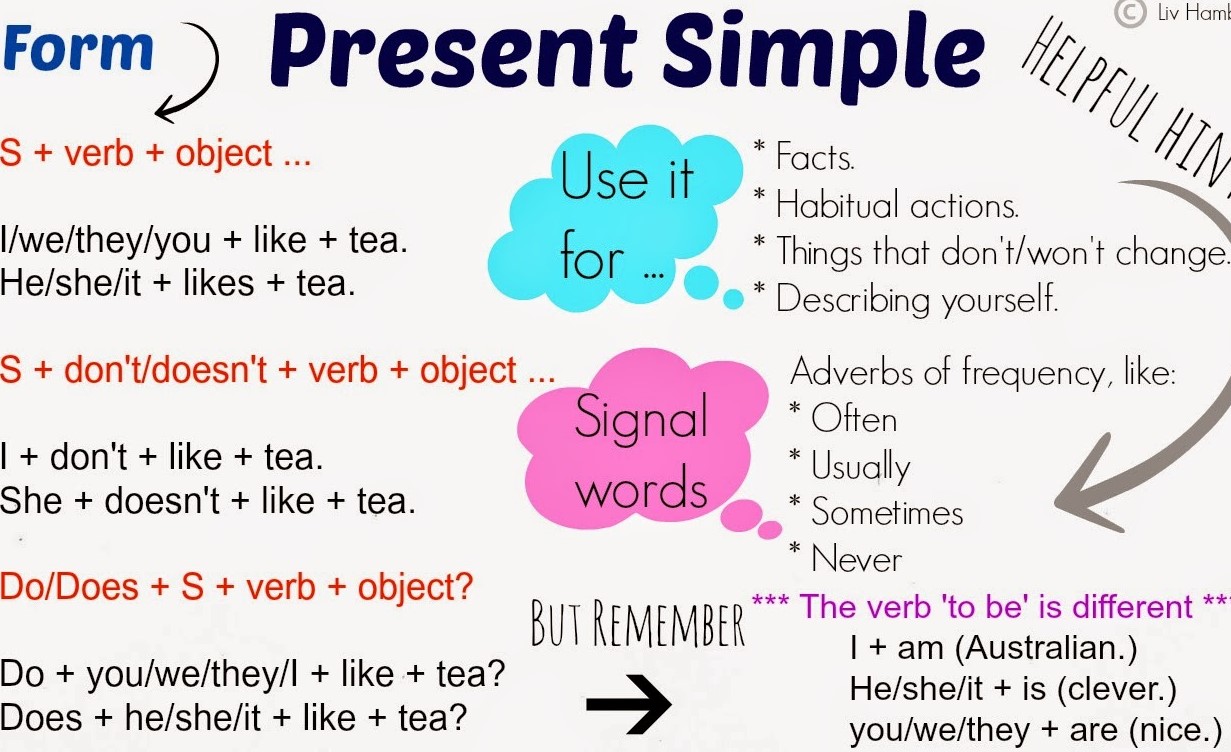
Present simple transformations

Hi! You have here 2 documents; one is to transform sentences in present simple (positive, negative and questions) and the other one is the key (the answers).
Make sure you do the exercises first and then, when you finish, you make corrections.

Sentence trasnsformations

Sentence transformation - KEY

Resultado de imagen de present simple

jueves, 3 de diciembre de 2015

More about Present perfefct and present perfect continuous


I attach here a presentation to insist on the differences between present perfect simple and continuous. I hope it is clear.


Pres perf / pres. perf cont


viernes, 27 de marzo de 2015

Past perfect

After reading your narrative and the last quizz done in class, I have the impression that you need a bit more practice with the past perfect.
I attach here the extra exercises I gave you yesterday and the key. I hope you don't find it difficult.


Past perfect exercises
Past perfect_key

domingo, 18 de enero de 2015

Difficult verbs: HOPE, EXPECT, WAIT, LOOK FORWARD TO


I attach some information about some verbs we have seen in class and seem to be particularly difficult to distinguish for a Spanish student.

Read the information carefully and the do the exercises at the botton of the page. We'll correct them in class next Tuesday

Hope, expect, wait, look forward to


lunes, 17 de noviembre de 2014

Extreme adjectives

Some more examples than the ones we saw in class last week.


ADJECTIVES

GRADABLE
NON GRADABLE
(EXTREME)
Angry
Furious
Bad
Awful
Big
Enormous
Cold
Freezing
Dirty
Filthy
Exciting
Thrilling
Frightened
Terrified
Funny
Hilarious
Good
Delicious
Good
Fantastic
Hot
Boiling
Interesting
Fascinating
Nice
Charming
Pretty
Gorgeous
Small
Tiny
Surprised
Astonished
Tired
Exhausted


A BIT
ABSOLUTELY
FAIRLY
REALLY
QUITE
INCREDIBLY
VERY
EXTREMELY
REALLY


miércoles, 14 de mayo de 2014

Countable & Uncountable Nouns


Countable and uncountable nouns
·   You use nouns to name things. 


Countable nouns


Uncountable nouns

You can count these.
There are singular and plural forms

   one cat , two cats
   one student,  ten students


You can’t count these.
There is only one form.

rice, milk, water, sugar, furniture, weather, information

You use single and plural verbs.

The lesson starts at 9.30.
The lessons start at 9.30.


You always use a singular verb.

There is no furniture in there.


You can use a or an in singular.
an envelope, a letter
You can use some or any in plural.
There are some chairs,
There aren't any chairs.
Are there any chairs?

You cannot use a or an in front of them.
You can use some or any
Bread, wine, rice, luggage
There's some bread.
There isn't any rice
Do you have any luggage?

How many bananas are there left?
= ¿Cuántos/as?

There are a lot of /many cups here
There aren't many cups.
Are there many cups here?

How much oil is there in the bottle?
= ¿Cuánto/a?

There’s a lot of sugar in the bowl.
There isn't much sugar.
Is there much sugar?

You can use not many and a few
= no muchos, pocos.

There are a few people waiting for the bus.
There aren’t many people here today.

You can use not much and a little
= no mucho, poco.

There is a little sugar left.

There is not much flour left.


Click here to have the document in word and to have some exercises:

Countable & Uncountable nouns


miércoles, 15 de mayo de 2013

Table of irregular verbs

Thanks to Eduardo, you can see another way to study the irregular verbs. You have many more verbs than you have to study this year, but you will be able to use the table also in the future.

Click here to see the table

Table of irregular verbs (classified)